LMD and Treatment Changes

Thank you to everyone for reaching out and checking in with me, Andrew, other family members, and the close friends who have been on-call for us these last few weeks. It’s been a hectic, busy, and an overwhelming time — especially the last week or so. 

During the first two weeks post-radiation, I was able to recuperate with a relative lack of chaos. Still, even in the somewhat stable days, many moving parts were being coordinated and researched. I was doing that with a brain that still isn’t cognitively 100% and all of the other side effects I wrote about in the last post

But I have made progress, logistics are falling into place now, and a plan is coming together that makes sense and gives me some hope. Let’s get into it! The good, the bad, and the ugly…except not in that order.

The Ugly — When I was first told about Leptomeningeal Disease (LMD), I didn’t fully comprehend what was being thrown my way. It was entirely out of left field, and I have learned throughout August that LMD is rare — only 3-5% of all breast cancers metastasize this way, and in my subtype of breast cancer (hormone positive, HER2-), this is even rarer. We are dealing with a unicorn here, not in a good way. LMD is extremely serious and dangerous. The rapid response to getting my treatment started was appropriate for a reason. My personal LMD is also acting exceptionally aggressively, and we don’t know why. If we can’t get control of this disease quickly, this is the worst-case scenario. We have now jumped the queue on other treatment options that work well in other parts of the body to mainly focus on the LMD because I am symptomatic, and it’s spreading. 

The Bad — it’s spreading. Yeah, after whole-brain radiation and a dose of Doxil, I continued to have symptoms. My feet continue to experience numbness and tingling, which isn’t resolving. I bought myself a pair of “stability-sneakers” to walk more efficiently and comfortably. At least they aren’t wicked ugly! haha! I also continue to feel off balance and have weakness in my legs and arms. My doctors have said these symptoms are the cancer taking root in my spinal cord, not the effects of the steroids or treatment. The steroids cause my jitters and cloudy mind, but anything else is really cancer itself. The scan I had two Fridays ago confirmed that the LMD was more visible and that the cancer now has left lesions on the cord itself. Not good. 
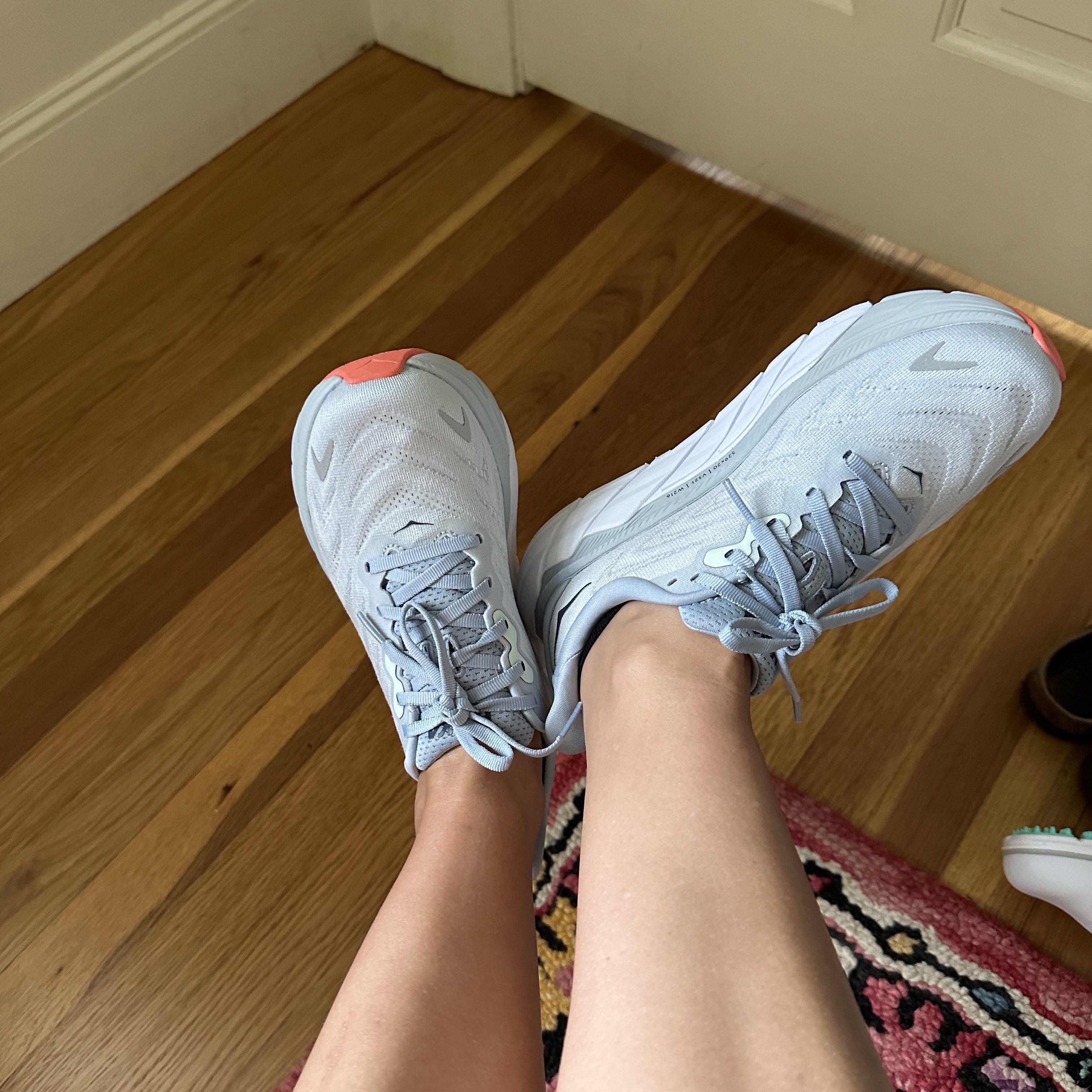
New sneakers
Getting a lumbar puncture so that we can learn if the cancer has mutated or changed in some way. Trying to figure out why it’s so aggressive.

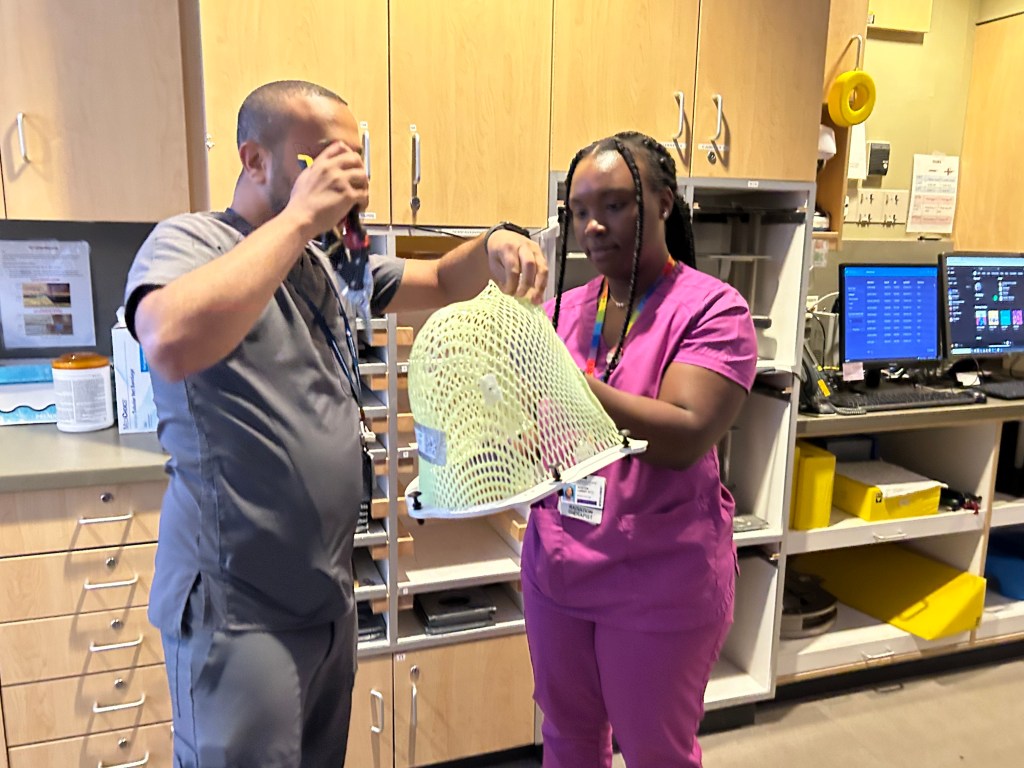
The Good — Now, here is where the plan and the hope come in. When considering treatments when first given the LMD diagnosis, two types of radiation were presented to me. Traditional X-ray or photon radiation to the whole-brain or proton radiation therapy. Conventional whole-brain radiation has been the standard of care for a long time and is a good option when you want to treat the whole brain because the radiation beams will not hit any other organs and will only impact the brain. Cool cool, that makes sense. But when we are talking about radiating the spinal cord, if traditional radiation is used, it goes beyond the cord, and the beams will hit the heart, lungs, digestive organs, bladder, etc. Some severe side effects come along with that, which is why traditional radiation to the spine isn’t preferred. 

Proton therapy, on the other hand, has this unique ability to stop radiating at the tissue that you want it to treat, avoiding other things like those organs we want to protect. It’s very promising. Proton therapy also has a better efficacy with LMD, potentially extending my life by months, not weeks, and offering a better quality of life. So why didn’t I do proton therapy to start with? It’s not as widely available, it takes longer to map/simulate, and insurance always denies it before approving it, so that process takes TIME. I didn’t have time on my side when I was given the news. Remember, I said that if left untreated, LMD can be deadly within weeks. 

There are not a lot of proton centers around the USA. There is one at Mass General (MGH) in Boston, but they refused to take me on as a patient because they don’t like to split up brain and cord treatment, and their list of waiting patients is quite long. So, I started digging elsewhere. I found that there are less than 40 centers in the country that can do proton therapy, and since this is me, I wanted to look at the best ones first. My radiation oncologist said if I could find a place to take me on as a patient, he would support it, but if I couldn’t, we couldn’t wait much longer, and my only option would be doing traditional radiation to the spine next week. 

I have reached out to four centers, and eventually, one in New Jersey worked quickly and said YES to taking me on as a patient. The center is called ProCure and is in Somerset, NJ. They are given a lot of overflow patients from Memorial Sloan Kettering (which, like MGH, has a long wait list). They have been great about working with my insurance and expediting my case. The whole process has been overwhelming yet smooth with them, making me feel like my efforts are moving me in the right direction. This puzzle piece is coming together. 

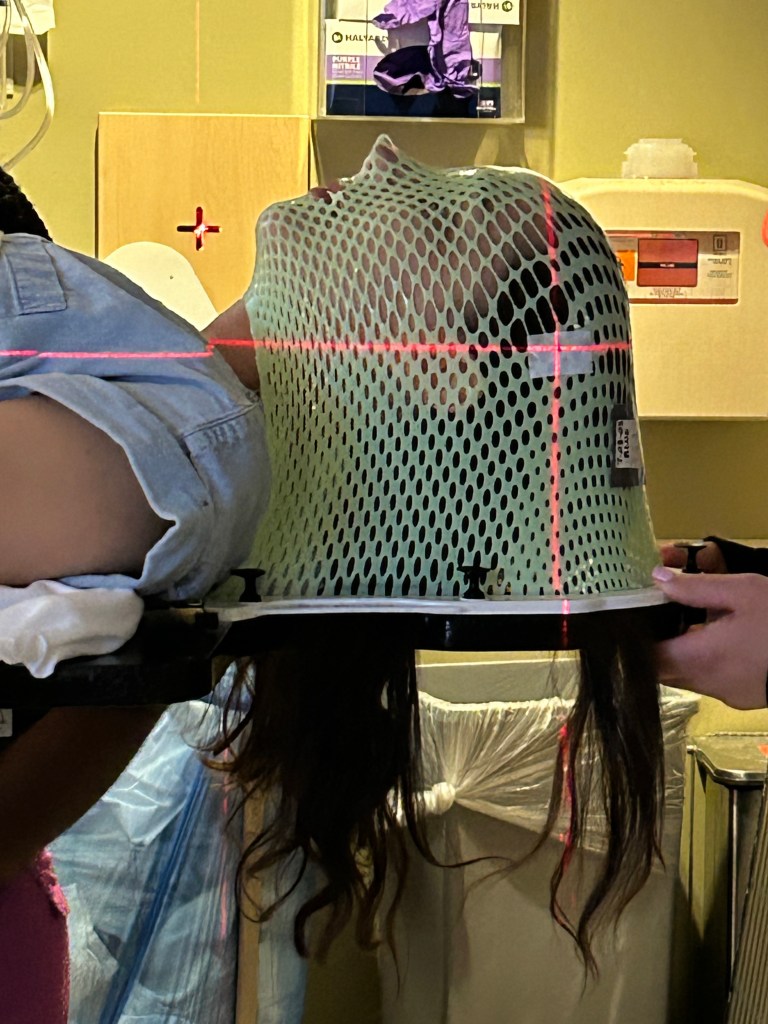
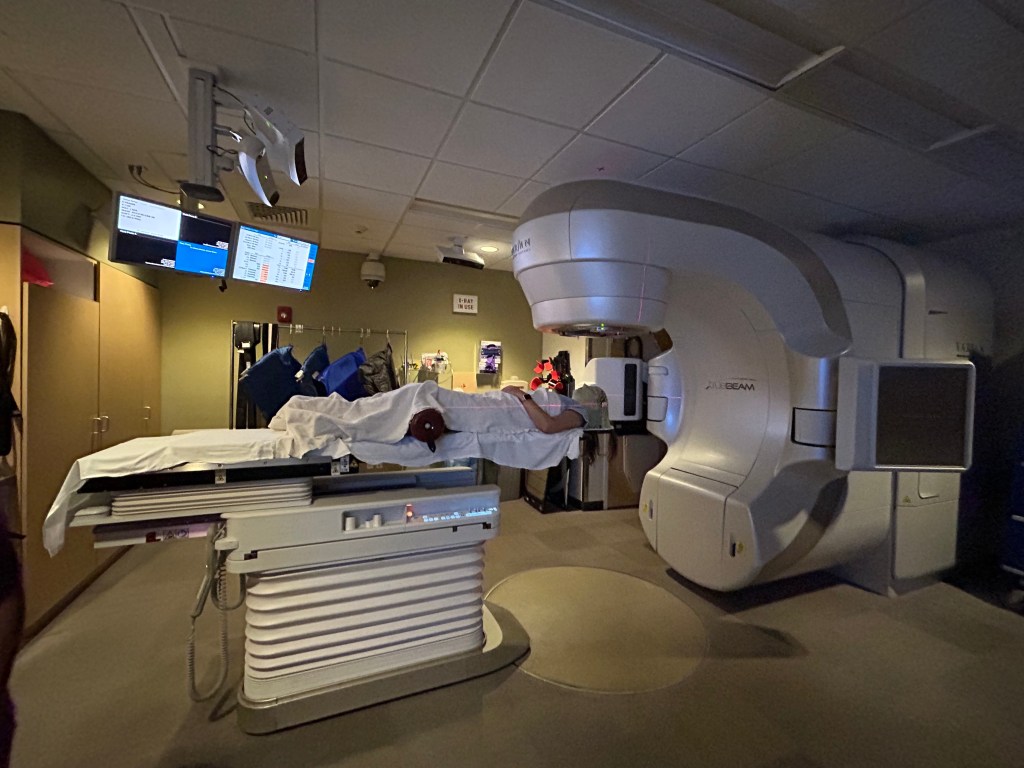
Right now, the radiation plan is that I will go down to NJ this coming week with my sister-in-law on Tuesday/Wednesday via train (I still can’t fly as my seizure risk is still thought to be elevated). This initial appointment will be for mapping/planning/radiation simulation. After the doctors collect all the information they need, they can do all of the calculations and get me started on 10 daily treatments beginning Monday or Tuesday of the following week. I will need to set up shop in NJ for 5 days at a time, and I’ll come home the weekend in between. 

It’s a huge sacrifice for my family to support me in this, and I am so grateful for their willingness to see the hope this treatment offers, too. Andrew will remain in NH with the kids. My in-laws and close friends have been pitching in with childcare, rides, and support. We added dates to the meal train to help Andrew, too. One of my sisters and one of my brothers will split their time in NJ with me, so I have accompaniment. My mom is coming to NH to help out as well. I cannot express enough how much this all means to me. This isn’t for the faint of heart. In addition to my own Cancerland stuff, we still have a very active and full life, including my son starting a new school this fall, his 9th birthday, fall sports, music, and other activities. It’s A LOT, A LOT – ALOT. 

Dr. Tolaney and me before the Jimmy Fund Telethon interview we did last Wednesday
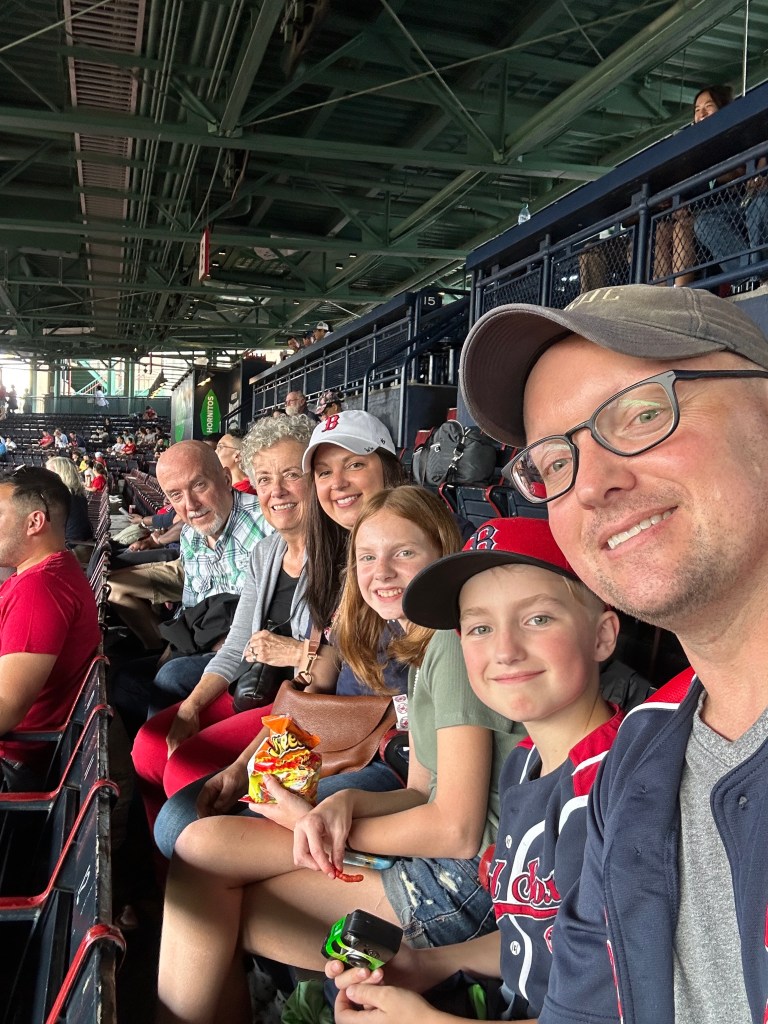
At the game after the Jimmy Fund Telethon interview. What a fun way to say goodbye to summer!

Radiation is targeted, though; we must treat my body systemically, too. Doxil was clearly not working because the LMD grew, and according to my CT scan done last Thursday, the lesions on my liver, that were improving on Taxol, also started to grow again. Out with Doxil and in with something new.

My oncologist wanted to start me on a new chemo before radiation. Still, timing is tricky because I needed about a week of “wash-out” between chemo and radiation so that I wasn’t miserable with side effects. I was scheduled to get Sacituzumab (AKA Saci or Trodelvy) this Thursday, but I got a call yesterday saying they could fit me in today (Sunday) for a treatment. I jumped at the opportunity and received my first dose of Saci. 

The chemo itself is a cousin of Enhertu (was on from January 2023 to May 2023), but it has shown to be a very effective drug at crossing the blood-brain barrier and hitting really aggressive breast cancer. It’s a heavy hitter though, and requires many pre-meds. I expect to have side effects around day 3-4 and last a few days. I am told I can expect nausea, maybe vomiting, diarrhea, fatigue, hair won’t be coming back on this one, low white blood counts, etc. You know, all of the things we think of come along with traditional IV chemotherapy. 

If you’re still here reading this, I appreciate it. I will always try to text or message you back if you reach out; it might take a day or two. Please continue to send those prayers and good vibes my way. I am not asking for a miracle, just manageable side effects and a little more time with my loved ones. 

Sending you all a big Hannah Hug tonight!
Post Radiation Update

I wrapped up whole-brain radiation on August 2nd. The process of getting zapped by laser beams was pretty much painless and quick. The drives down and back were great because of the company that took me. I had one Doxil (chemo) treatment, which also went relatively smoothly. It’s one of the hardest-hitting chemotherapies that I can be on, but at this point, I am just so used to this, I guess. But all in all, the week went smoothly, and we ended it by heading up to Maine for a long weekend at a lake house with our extended family. 

Maine was beautiful. Spending time with family was fun. Being in nature was glorious. The timing after being in Cancerland for 10ish days straight was priceless. My best longest-time friend Sara also visited last week and helped me with everything around the house that I needed assistance with, including getting the kids off to Camp Kesem. She was not only helpful, but we got to be silly and say YES to some great activities. She fit right in with my Oyster River besties, too — my heart is so happy and full! All around, the last few weeks have been full and mostly wonderful despite all that Cancerland had to bring to the table. 

Now the recuperation and healing from whole-brain radiation is a totally different story. I am 18 days out from the last blast. I started feeling unlike myself a few days post, primarily due to steroid use*, but the actual radiation side effects started to majorly impact almost everything. 

  • My cognition is impaired, meaning I am slower with processing, I have a hard time focusing on any task or conversation, and it takes a lot of effort to do either of those things; my short-term memory is shit, and numbers like simple addition and counting just aren’t computing quickly for me. My brain isn’t mine right now. It’s such a strange feeling to know I was different before, and I know what it is to be clear-headed and capable at a more advanced level, and I am just unable to get there. I was writing a simple word the other day and couldn’t figure out how to spell it. I knew I spelled it wrong, but I couldn’t even recognize which version was the correct version. So phonetics is what I went with. At times it’s like being a 1st grader again. I wonder if this is a mild feeling of what it’s like to recover from a brain injury? Just know, if we are having a conversation and I am getting glassy or asking you to repeat things/clarify details you just said minutes before, blame the zapped brain. I care; I really do! 
  • Physically I have changed. This is a two-parter. Because of the steroids, I have been hungry, so I have been eating; I have gained weight from that and water weight. I am puffy. My skinsuit feels like the shell of someone else. I am uncomfortable in basically anything that isn’t loose or elastic. 
  • The second part of the physical changes is what the actual radiation has done to me. I am much more physically weak. I have had extremity weakness in my arms and hands and numbness in my toes. My legs can still walk and get me where I need to go, but my balance is off, and I can’t walk very fast. My hands shake a little all the time, and it’s hard to do fine motor activities. I am painting a room in my house right now, and the task itself is taking much longer than it would typically have before radiation and my hand shakes, so I have to be more deliberate when doing those edges. But I am DETERMINED to get it done. 
  • To add to this, my hair thinned to the point where I looked like a zombie back from the dead this week, so I shaved it off. Before, I think I did a decent job looking pretty un-sick; now I look like cancer Hannah. Puffy, bald, and dazed. 
No hair, puffy face, and paint on my nails from my distraction project

What can I expect going forward? The truth is we don’t really know. Everything I am experiencing sounds pretty standard at this point, but how fast I recover and how much of my old self I get back is all uncertain. Cognitively, in a few weeks, I should start to see some slow progress toward losing that fogginess and distraction. I can add cognitive therapy to rehab if needed, which is like PT for the brain. I have been working on my NYT’s online games and other brain teasers to exercise that muscle. If you have any suggestions or want to send any brain exercises my way, I am open to receiving them. Physically, I have asked about OT or PT, but we will give it a couple more weeks of just “being” before adding those therapies. I want to go out for walks, so if you are looking for a SLOW walking partner for a mile or two, text me to get out. Watch out, though, I might bump into you a few times along the way 🙂 

The PA in the radiation oncology office reminded me last week that my brain has been through a lot; that I need to give myself grace for this month and not push myself too much. So I have set out to do this painting project to provide myself with a distraction that isn’t too challenging physically or mentally but definitely is the right level of push right now. 

My back has been increasing in pain this last week. This could be due to side effects from radiation, but my gut tells me the cancer is probably pretty active in my spine still. Because the cancer is in the spinal fluid and not just spots in the brain tissue, when we did the brain radiation, the beams only hit the fluid of the brain, not the spinal cord. I’ll write up another post in a few days about the ins and outs of this, but basically, we couldn’t treat the whole water system, just part of it, but ultimately they all mix together. So please be praying and sending some good vibes that the scan of my spine that I’ll have next Friday shows some positive signs of slow cancer growth and no significant changes in the wrong direction. 

*To refresh you, I am taking steroids to combat the inflammation that is happening in my brain due to active cancer in the spinal fluid and now the radiation itself. The inflammation causes me symptoms like nausea, vomiting, dizziness, and headaches.*

General breast health 101

*I want to be clear that I am not a medical professional. If you have any personal questions where medical advice is required, please seek out a medical professional*

In recent years insurance started covering routine screening mammograms for women over 40 years old. But what do those of us with breasts (women, men, trans, and non-binary folks — that’s all of us!) do before age 40 and between screenings? Also, are mammograms our only option? I hope that this first breast health post helps to answer some questions.

Personal recommendations

My number one recommendation is to get to know your body. You are your biggest advocate; no one should know your body better. Self-breast exams are exactly how I found both of my tumors. If I didn’t know what my own chest felt like, then I wouldn’t have been able to tell my doctors something was different, off, not my normal.

And to be honest, there are plenty of women I know that go to their doctor saying, “This doesn’t feel right,” and their doctor disregards their concerns because they are “too young” or “not at high risk,” or whatever else they have been told. If you know your body, you can push back, you can advocate, you can get an answer. But if you leave the knowledge of your body up to someone else, you are giving up bodily autonomy.

Actually, I want to take a second to give a shout-out to both my mom and my sister, Heather. My mom used to hang this shower tag in our shower that showed me how to do a self-breast exam. I was a teenager and I didn’t take it super seriously, but I can still see the pink, black, and white images and I remember thinking I guess I’ll do this a few times a year and be okay. I appreciated that unspoken encouragement to take my breast health seriously. Heather, on the other hand, was more outspoken when it came to healthy bodies. She was the one that told me I needed to make sure I knew my body before anyone else knew my body. That went for both breast health and sexual health. And while I am here, I want to say that I have known two people (not associated with my cancer community) to find their own cancers in their genital areas because of self exams/knowing their bodies and their normal. Knowing your body is empowering and enlightening.

Since this post aims to inform about breast health, let’s get back to that topic. Breast exams are something we need to do more than a few times a year. Teenager Hannah was wrong to think that a few times a year was enough. In fact, if you have breasts (remember that’s everyone) you should be doing these self-exams once a month, around the same time every month, so that you’re feeling the breast tissue in about the same place in your monthly cycle (if you have one). There is a social media movement called #feelitonthefirst which, is just a nice reminder to do your self-breast exam every month on the first day. Sometimes you might feel a lump/bump one day and not feel it a few days later. Our tissue changes throughout the month, so the rule of thumb given to me by my first oncologist was self-exams once a month and not too close together or we will never notice a change, or we will notice every little change. So my second recommendation is self-exam once a month, and changes are normal.

I want to reiterate too taht EVERYONE should be doing self-exams throughout their whole lives — flat chested, with or without mastectomies, with or without reconstruction, health breasts, men, women, teens, postmenopausal folks. All of you!

Self-breast exams

How do you perform a self-breast exam? What are you feeling for? What is normal? What is not?

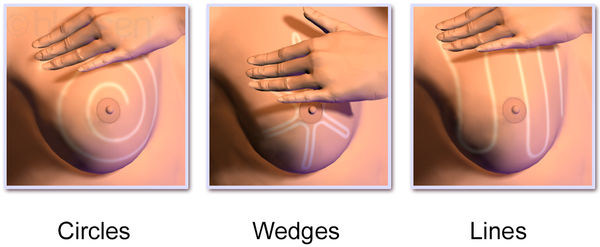
I will provide a few pictures to help guide you, but honestly, head over to Instagram and look at the tag #feelitonthefirst or #selfexamgram, and you will see many great videos on how to do these exams. My particular favorites are by @dearcancer_itsme (does them with her kids and she’s flat chested after having implants out), @ihartericka (she is post-mastectomy, has no nipples, and does hers without a shirt on which I find helpful), and @allynrose (she does some laying down, standing, and talks you through stratagies).

To begin, look in the mirror with your shirt off. You’re looking for any physical abnormalities such as dimpling, lumps/bumps, discharge, puckering, or skin changes. Make sure you’re lifting your arms up as well as looking while your arms are down. Sometimes changes don’t appear until the skin or tissue is stretched tighter.

Next, feel those breasts! You can do this in the shower or in front of the mirror. There are a few different methods for feeling the tissue, but I personally like doing the wedge and rubbing rather than tapping. You will see both rubbing and tapping used, it’s just a matter of preference. I will use the tapping method more on my neck, clavicle, and sometimes underarms. Do whatever method is comfortable for you and helps you feel all of the tissue.

Finally,as a reminder, you have two breasts, so do the exam on both sides. You’re feeling all the up into your neck, under your arms, and into those armpits, your sternum, and of course, the breast tissue. If you wear a bra or are familiar with where a bra would wrap around your sides, that’s all potential breast tissue.

The what if

Now what do you do if you find something like a lump, puckering, skin change, etc? Do not panic, like seriously. Remind yourself that most of these things are benign. Do another breast exam in a week or so and see if there have been any changes to that area. If the change in your tissue has grown bigger, is swelling and tender, or doesn’t resolve itself in one to two weeks, make an appointment with a GYN or PCP. It’s never too early or too late to get some professional eyes and hands on something of concern. I personally went to my GYN when I found my first lump because I was still breastfeeding and figured they would know breasts best at this stage of my life. With the growth on my sternum (second diagnosis) I was seen by my oncologist.

My first lump felt like the size of an almond, pretty firm, and was sort of stuck in place on my rib at about 6 o’clock on my left breast. I made sure to let some friends feel it before I had it taken out. As uncomfortable as that was, sharing that experience, it was just the start of me trying to help others advocate for themselves and their bodies.

What if you get it checked out, and your doctor is concerned? Usually, the provider will order a diagnostic mammogram, an ultrasound, or maybe even a biopsy. For my initial diagnosis, since I was breastfeeding, a mammogram wasn’t performed right away. Essentially a breast with milk in the ducts will just look like a while mass of tissue. Impossible to read. So instead I was recommeded to get an ultrasound and when that showed concerning features, I was then recommended to get a needle biopsy. The biopsy results then confirmed that the almond-sized lump was indeed cancer.

Again, I want to reiterate that a lump doesn’t automatically mean cancer. I wasn’t even thinking that the biopsy would show cancer. I was sure I was going to be told I had a fibroadenoma or a cyst because I have always had fibrous breasts and I knew I wasn’t at high risk for cancer.

Things turned out differently for me, but I still beleive that most of you will be okay. Just make sure you take your health seriously. If you are worried or not comfortable, find someone who will listen and get to the bottom of the concern.

Screening or diagnositc options

Mammograms aren’t our best option out there. You have probably heard me say this before. If you are at high risk for breast cancer, you are young and have had a concern or concerning mammogram, or you’re breastfeeding and need screening, then do not settle for a mammogram only. Please ask your provider to give you a breast MRI, and ultrasound, or now something new is a breast CT. I cannot wait for the breast CT to come to our local area. Breast MRIs can be problematic because they are extremely sensitive and can give false positives, which can force someone into getting a biopsy that shows that the lump/bump is actually negative for cancer. This can be stressful and unsettling. Ultrasounds are good if you’re looking at specific place in the breast, but aren’t great for looking at the whole breast. I don’t know much about the breast CT yet, but what I have read is that they are pretty fast and easy like mammograms, but without the squeezing. That sounds promising.

Most premenopausal folks will be told they have dense breasts, which is another hard thing about mammograms. They just don’t pick up on the very small details that are hidden in dense breast tissue. If you are told you have dense breast tissue, I highly recommend that you ask about alternating mammograms and MRIs for screening.

What else do you want to know?

Comment below if there is something you want to know more about. I want to make sure you’re getting trusted and meaningful information!

Cancer: The fast and the furious

So I know that I posted an upbeat and fun little video last week about my taxol infusion experience, but one thing I didn’t let on is that I was dealing with a much bigger and scarier issue I wasn’t ready to share yet. I am sharing now because it’s been hard to keep this information from my support network and cancerland has changed rapidly for me in the last week. 

About 4 weeks ago I entered into a brain MRI study that was asking the question as to whether or not adding brain MRIs to the standard of care imaging screenings made sense. As of right now, there are no brain scans done preemptively upon diagnosis unless there are symptoms that would be of concern (i.e., headaches, vision changes, unexplained vomiting, changes in any of your senses or balance, etc.). Adding these brain MRIs to an initial diagnosis or to time of progression instead of when a patient becomes symptomatic may lead to finding brain metastases early and may allow for early monitoring or faster action when/if something comes up. 

Brigham and Women’s Radiation Oncology Unit

In my case, I went for the screening MRI for this study thinking I would just be entered into the study and nothing would come of it, at least not right now. Three days later I got a call from the doctor running the study, Dr. Aizer, and he informed me that there were three tiny spots in the posterior fossa on my brain. He wanted to scan again, but we needed a few weeks between scans to see if these lesions were stable or changing. 

The waiting game is ALWAYS the hardest. I told only a few people, but I hate to put that same information on anyone else to carry. To know information but not be able to do anything about it, is excruciating. 

In the meantime, I was experiencing nausea, dizzy spells, one day I could barely walk without getting sick, fatigue, some visual changes, etc. I kept thinking it was all due to taxol or dehydration. Hoping and wishing none of my side effects were due to something happening in my brain. 

So we get to Wednesday this week and I go in for the second brain MRI and found out that the cancer has in fact grown and is now in my cerebral spinal fluid, which is a condition called leptomeningeal disease. This is rare and very serious. If left untreated for even a few weeks more and it can be deadly.

The radiation oncologist, Dr. Aizer, is now a part of my team and he’s great. He calmly and thoroughly explained the seriousness of the situation, and how we needed to act quickly in terms of treatment. 

Treatment for brain metastases that are not in control usually includes radiation followed by chemo which for sure shows that it can cross the blood-brain barrier. This is my current plan. Five whole-brain radiation treatments, then moving on to a chemo called Doxil next week. 

I am leaving out some details that are sort of unnecessary here about what else I had to do this week, but I have been down in Boston on Wednesday, Thursday, Friday, and today (Saturday). It’s been A LOT this week. I couldn’t do it without the rides and help with childcare that has been given so generously. Thank you! I had mapping/planning for radiation yesterday along with my first radiation treatment. Today I had my second radiation treatment. The rest will continue Monday through Wednesday. 

I’ll try to have more to come about what’s next when I know more information, but for now, I leave you with this scary and uncertain news. Thank you all for the support and flexibility this week as I have had anything but a predictable and easy week. 

Taxol Update

Hello friends! I had scans a couple of weeks ago now and have some good news to share! First set of good scans in a very long time. The liver lesions have mostly shrunk or those that didn’t shrink have remained stable. Additionally, the liver enyzmes I have been worried about are heading down too! Two out of the three main enzymes that I watch are now in the normal range. And one is still fairly high, but it heads down a few points every week. Yay!

Side effects remain pretty manageable, although they are starting to accumulate. I have neuropathy in my feet, I am feeling nauseous a little more frequently, and my fatigue is kicking up a notch. My hair has continued to thin, but that has slowed a little the last couple of weeks. Even with all of that, I am still living a full life!

Two weeks ago I recorded a video of my day at DF just so you could get a little look at what an infusion day is like there. This infusion day was shorter than days where I get to see my doctor or nurse practitioner. I only see a provider on the first day of each cycle. And those days are extra LONG. This was recorded on week 2 (of 3) in my third cycle. Let me know if you have any questions about what you see (or didn’t see).

Just a quick video of my long day!

Next up: Taxol

I hoped I wouldn’t have a new treatment line to write about for a long time, but the time has come to change again. I am now on my 4th treatment line in the MBC setting — 1) Verzenio (with Keytruda for a while) + Anastrozole (4 years); 2) Xeloda (2.5 months); 3) Enhertu (5 months); 4) Taxol (current). 

Earlier this week, I had scans: MRIs of my hips and liver and PET/CT of my chest, abdomen, and pelvis. On Enhertu, I was being scanned every six weeks, and if you remember, the last two scan results showed some growth and some shrinkage, but we called that “stable” even though things were mixed. Going into the scans this week, I had a feeling that I wouldn’t have mixed results again. Something inside me just knew things weren’t moving in the right direction. 

Results showed that my bones likely have stable-ish disease, so that’s pretty good. But my liver lesions have grown. Not a lot, but enough that I cannot stay on Enhertu any longer. The cancer has become resistant to this medication. I got about 5 months on this treatment line. Not great. My liver enzymes continue to rise slowly, and my tumor markers are also rising again. 

After discussing the scans, my oncologist and the fellow presented some treatment options to me, and I asked a bunch of questions about the pros and cons of these options; the leading choice was Taxol, though. I was hesitant to do this chemotherapy again. I was on Taxol in 2016 for cancer 1.0. It’s usually pretty well tolerated with manageable side effects, but I did something called dose-dense Taxol previously, which can be much harder on folks as it was for me. This time though, I will be doing regular taxol infusions. The schedule sucks, to say the least — weekly infusions for three weeks and then one week off. This is one cycle. I will have two cycles and then have scans again. Because my doses are more spread out compared to my dose-dense regimen before, I should tolerate the infusions better. Fingers crossed, my friends! 

That’s the gist of it for now. 

If you want to hear about my insane day on Thursday, then keep reading. More details to follow.

A full day

Yesterday my FIL picked me up at 10am. I usually drive us down to Boston, and he drives us back, but today I needed him to drive so that I could take a call from 11-12pm while we were driving. I started a virtual Memory + Attention workshop through the Dempsey Center, which will be very cool to be a part of since I have been struggling HARD with this since beginning IV chemo. 

When we arrived at Dana Farber, we checked in, and I headed over to BWH to visit my friend that is in hospice over there. I am so grateful that my friend’s family allowed me to have time with her. I hope to see her again, possibly next week, but only time will tell. Seeing a friend in this state is tough, especially when they are dying from the same disease I have. But it’s also incredibly powerful and meaningful to be in the presence of someone you love in their final days. I came out of that visit with renewed strength to keep living fully as long as I am able. I was also amazed that she was still being a friend to me in these moments. She and her husband bothered to check in with me. Seriously incredible and selfless. 

After compartmentalizing that visit as best as I could, I made my way over to DF again to meet with my FIL for some lunch. I scarfed a slice of pizza and battled with the elevator traffic to make my way to my psychiatry appointment. I started a medication called Zyprexa three weeks prior. It was to help with sleep, nausea, focus, attention, and mild anxiety. The good news is that the very low dose has been working wonders, and I have felt much better. So I will continue with this medication for a bit longer. Hopefully, it works well with Taxol too. 

I headed back downstairs and got my blood work at lab services and then back upstairs to meet my FIL in the atrium. If you’re ever at DF, the atrium is a lovely quiet, tranquil indoor garden in a sea of chaos. 

Next up, we headed upstairs again for my oncology appointment. My appointment with my oncologist was a little crazy, to say the least. Unfortunately, appointments were running behind, so I didn’t get in to see my oncologist until 4pm. We discussed the scans and new treatment options (two standard-of-care options and three clinical trials). At 4:15pm, mid-discussion, Dr. Tolaney got a call from infusion saying that if I wanted to start Taxol that day, I needed to be in an infusion chair by 4:30pm because of how long it all takes to infuse with cold capping. 

So with that, I put on my decision-making hat: if Taxol was the best option for right now, then why put off starting it until next week? Yes, let’s begin today. I signed the paperwork, and we worked out a rough schedule. Three weeks of infusions, one week break, repeat. Scans in eight weeks.

Want to know a little about Taxol? Below is the information sheet I was given. Of course, we also talked more in-depth about it, but these are the basics. 

Folks on Taxol that choose to cold cap have had pretty decent success. I will continue with my cold capping but will probably encounter even more thinning than before. I hope it won’t be too bad. I’ll keep ya posted. 

The oncology visit was brief and felt rushed, which is not my typical experience, but I made it into the infusion chair by 4:30pm. Before I left the oncology appointment, I asked for a new liver biopsy and another liquid (blood) biopsy. The information gathered from these biopsies won’t change the choice to start Taxol, but it will help with knowing what treatment should come next. I should probably get the tissue biopsy in the next week or two. And the liquid biopsy was done yesterday in infusion; those results should be back in two-ish weeks. 

Once I was in the infusion chair, we started with the premeds and scalp cooling. Premeds are different for Taxol than for Enhertu. I have to have steroids, Pepcid, and Benadryl. Taxol can cause allergic reactions, so they premed with Pepcid and Benadryl to help offset any reaction. The steroids help with nausea. Plus, I am on a low dose of Zyprexa (medication from a psychiatrist), which also helps with nausea. I remember that the steroids will hype me up for a few days, and then I’ll crash, but hopefully, the nausea will be minimal. These premeds were all administered through my port, and the Benadryl made me feel crazy! But that wore off, and I was just sleepy for a bit. 

I walked out of the infusion suite with my FIL at 8:30pm. We made it home by 9:45pm. It was a long day. 

I woke up this morning feeling good physically and mentally. Hoping to get out for a walk soon. I want to enjoy this sunny day! 

The meal train has been updated with a few more dates since my schedule is changing. If you feel so inclined to feed my family on treatment days, we very much appreciate it! Love to you all. XO

It’s not you, it’s me. Well actually, it’s all about you.

Last week I read some letters people had submitted to a magazine — letters written to cancer. Some were funny, some were angry, some were letters of acceptance, and some were breakup letters. I liked the breakup letters best. 

I’d like to write my own breakup letter, but because I cannot break up with breast cancer, I need to find a way to accept it. The bottom line is that I don’t need to be happy about accepting it. I refuse to say cancer was a gift, or my greatest teacher, or some bull shit like that. I have learned things while living with cancer, but I didn’t have to have cancer to learn those lessons. My general philosophy is that I refuse to live an unexamined life regardless of the circumstances. 

A friend of mine is in hospice right now. I visited her, and she struggled to get words out, so she had to make them really count when she could speak. She said, “I always wanted to do more, but I’ve done a lot, a lot of living.” That’s a beautiful thing to say. And I think even more it fits right in with my philosophy: examine life, be curious, make intentional choices, and without losing motivation, be gentle on yourself, but keep LIVING. 

My [abbreviated] letter:

So cancer, we cannot break up. You’re only growing more insidious as time goes on. But I know to expect you now. I have come to accept that truth. I have called you my shadow, contemplated you as a jabberwocky, tried to deny I knew you, and compared my life before and after you burst in. You have injected stress and uncertainty into my children’s lives, my husband’s life, and our family. You have taken friends away from me and their families. You have altered my plans more times than I can count. You have caused me bodily pain and mutilation. You have forced me to contemplate my mortality more than anyone cares to. You have caused me emotional anguish. I cannot say it’s all about me because, in all actuality, it’s you cancer. You have come along uninvited, unwanted; I have accepted that now. So I will continue to examine my life, keep pushing myself to take my roles seriously, and be intentional. I will continue to experience joy, give my people love, and be grateful for every moment I am here on this earth. And while doing all of that living, great living, I will expect your presence.

Your forever frenemy,

Hannah 

Enhertu update

It’s been 2.5 months since returning home from Denmark. I went straight into treatment, then recovery down time, then into unpacking, and reintegration back into life in Durham. Since being back I have continued to get Enhertu infusions every three weeks. 

I have had two sets of scans since being on Enhertu and both showed roughly the same thing: some growth of the metastatic liver lesions, some shrinkage of other liver lesions, and some increased activity in my bones, specifically in my hips, femurs, and a few vertebrae. I call this type of report “mixed” and generally it requires a closer look at blood work trends in order to make a decision about my disease status and whether or not I will remain on the current treatment regimen. 

Most recently I had mixed results on a liver MRI and a chest/abdomen/pelvis CT scan. I had blood work done as well which showed that 2 of my 4 liver enzymes were fine, 1 was creeping back up, and 1 was REALLY high still but actually trending downward. So the decision is I stay the course. Enhertu continues to be working, albeit not giving me miraculous results.  My oncologist says this is “stable disease.” 

I am publishing a couple of other posts today with more details about the treatment itself, but I wanted to make sure you had a quick update on the state of things right now.

A HUGE thank you to those that have been able to provide meals for us on treatment and recovery days. This has been incredibly helpful for Andrew and me as it’s one less thing we have had to balance. Here is a link for the meal train sign up. We add dates every six-ish weeks as I learn when my next treatments will be.

Enhertu side effects

As you may have read on another blog post, I have been having mixed results with this drug. As you can imagine, it’s frustrating that the cancer isn’t having a complete response. Treatment is hard, emotionally and physically, and it takes a toll. To not have great results, when it feels like it’s costing so much already, can be very disheartening, disappointing, and frustrating. That being said, stable is stable is stable… words I so desperately want to hear each time I go in for an appointment.

Sometimes I wonder if y’all are thinking why isn’t she jumping for joy for stable? Here’s why: right now, for me, stable is “mixed.” There is growth AND there is shrinkage or stability, but it’s not a homogeneous response. The heterogeneous nature of the response leaves me feeling very vulnerable. It feels like I am standing on the edge of a cliff and if a really big gust of wind came up behind me I could be swept away into the valley below. But on the other hand if the wind came at my front it could push me right back into safety. My liver lesions could turn on me at any moment and I could be kicked off this drug at any time.

I don’t have years of experience with mixed results, so I am still learning how to sit with that news. When I was on my first line of treatment in the MBC setting the cancer in my body shrank and shrank and shrank. I got to the place of no evidence of active disease (NEAD) and stayed there for a long time. I felt relatively well for a long time too. And I knew starting IV chemo would be a big challenge to my life, my body, and my mind.

NO LIGHT AT THE END OF THE TUNNEL

This wishy-washy place I am at right now is extremely hard to handle mentally. I am back to worrying about every little thing that feels off in my body, every hurt, every headache, every breath that feels difficult, etc. I know my body pretty well, but I don’t like to worry about it all the time. Who does? I remind myself often that I can tell cancer “not today” and I find joy in lots of small moments in my day. But below is a small glimpse into what I have to dig deep through to get to the joy.

In 2016 when I had my first round of IV chemo, I counted down from eight total chemo treatments. Every two weeks I got to cross another treatment off my list, which felt like moving towards the light at the end of the tunnel… a cure, an obstacle I overcame, the continuation of the rest of my life! I don’t have that count-down to the end anymore. This time I am counting up, hoping and praying that every three weeks I will actually be able to receive treatment, one more time. So far I have been able to receive five treatments. There is no lifetime limit on how many Enhertu infusions a patient can get because either the drug stops working or the side effects/adverse events are too big, too much for a patient’s body to tolerate. Remember, if a patient is moved off the drug it’s not their fault, they haven’t lost a battle. The drug has failed them. And even though I believe that with every fiber of my being, it’s really hard not to question: What could I have done differently if this drug gets taken away from me?

THE CYCLE

Let’s talk about what I feel every three weeks. We call these cycles for a reason. It’s cyclical and I am getting used to knowing what to expect for the most part. At my last treatment I realized I was starting to have a psychosomatic response before even receiving the medication in my IV line. I started to feel nauseous as soon as I hit the infusion suite. Not sure what I can do about that, so I dealt with it the same way I deal with nausea when I am not in the infusion suite: ginger chews, mint gum, and some slow breaths.

Since I am cold capping still, I get a dose of Ativan and ibuprofen to help take the edge off the freezing head. Before the chemo infusion I get pre-treated with anti-nausea drugs. I am currently receiving Aloxi, Emend, and Dexamethasone. These three medications will give me about three days of anti-nausea protection, but they aren’t perfect. I actually still feel pretty nauseous at times, I just don’t vomit.

I am usually very sleepy for the first 12hrs or so after the infusion, then the lasting effects of the Dexamethasone (a steroid) kicks in and I am in a weird awake, but exhausted state for 24hrs.  I do a lot of sitting, napping, and watch TV. My head isn’t right. I am often grumpy and spacey at the same time. On day 3 (which is usually Sunday since I have been having infusions on Thursdays) I am in bed most of the day. It’s the day my body is in the most pain (deep bone pain), I feel the most nauseous, the most exhausted, and just the worst all around. I wake up on Monday feeling WAY better, but still fuzzy and not quite like myself. Tuesday I am generally back to doing normal activities, and by Thursday (a whole week out from the infusion) I am back and ready to rock and roll into regular life. 

Not everyone that gets Enhertu feels this same way. We all have our own experience.

It’s hard to express the challenge if having 4ish days, every three weeks where I feel incapable of being normal or doing normal Hannah things. I am not one to just sit and relax easily. I don’t like pushing my normal activities onto anyone else. And I definitely don’t want to miss something because of chemo recovery, that’s just not fair! It’s hard on my kids because I am not in normal mom mode, and I am more obviously “sick.” It’s hard on my husband because he shoulders so much more in the lead up to and post infusion. Then once I am back on my feet again I put all of my energy into getting back up and running. The start and stop nature of the cycle is challenging for coordinating meetings, appointments that aren’t cancer related, play dates, activities for our family, etc. No one else’s schedule runs like that.

I have been making lists of projects that I can do while recovering and lists of things I can do when I am not in recovery mode. In my brain I work in these three week cycles: 1 week down, 2 weeks up. If you ever reach out to my during that week I am likely to either forget that we talked or forget to respond. If we make plans, make sure you remind me to write it down.

OTHER SIDE EFFECTS

There are the side effects that are more cumulative too. Like I alluded to above, my brain just doesn’t work quite the same as it did before I had Enhertu. There’s chemo fog that lasts 3-4 days. Then there is chemo brain which makes me feel like I have chemo induced ADHD (this is not a real thing btw, I made it up). I have trouble focusing, reading for more than a few minutes is a real challenge, my word recall is terrible, I walk into rooms and completely forget why I am there, if I don’t write things down I forget them almost immediately, I have been more impulsive, and more than a few times I have had racing thoughts I cannot slow down even though there is no reason for the panic. I am seeing a psychiatrist next week to talk about these changes.

Two other things I have to be very cognizant of, although I haven’t had issues with them as of yet, are issues of the heart and lungs. Enhertu can be cardio toxic meaning that it can cause heart issues. I have echocardiograms every three months to monitor this issue. The second issue, and probably more likely to occur than cardio toxicity, is something called interstitial lung disease (ILD). This is a fancy way of saying lung inflammation. This is a fairly common and could be a rapidly harmful side effect. Signs of ILD are quick onset of a dry cough or shortness of breath. If I have either of these symptoms, day or night, I have to call my oncologist right way. If someone develops ILD they would have to take a break from Enhertu and in many cases patients are pulled off the drug all together. Those are just another two things I have to think about every day.

Cold capping

Some of you have heard me talk about cold capping but most of you might not know what it is and why I do it. Consider this to be Hannah in Cancerland Cold Capping 101.

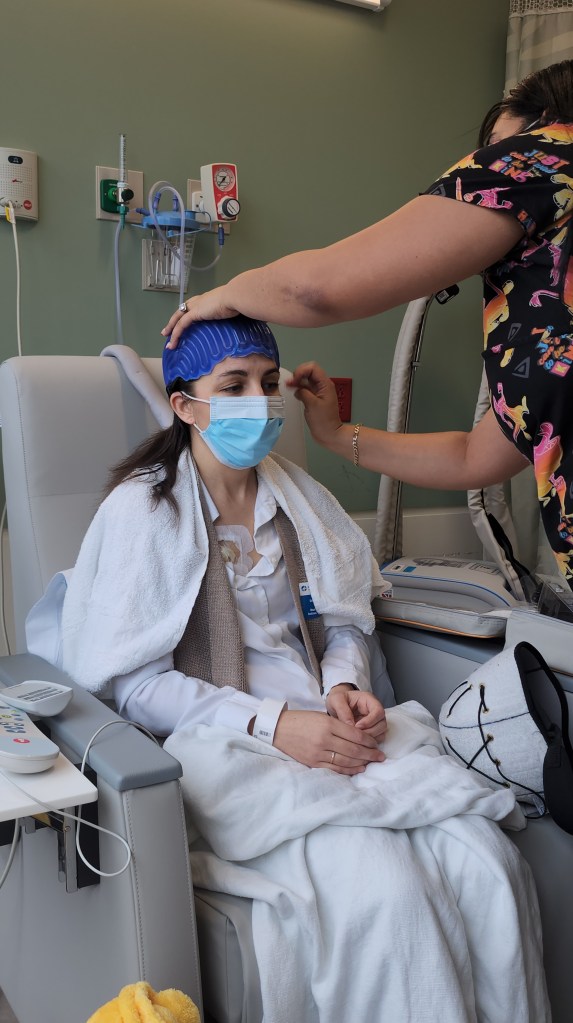
Cold capping is a thing chemo patients can do in an effort to preserve their hair. It’s called cold capping because the patient puts a specially designed cap on their head that cools the scalp during treatment. The idea is that the cold will cause the blood vessels to constrict which causes less of the chemo to reach the scalp. It also slows the cellular activity down in and around the hair follicle which may allow the hair to “hang on” a little longer.

Enhertu, the chemo I am currently on, causes complete alopecia in about 30% of patients and the rest have some degree of thinning. I want to keep as much of my hair for as long as possible so I asked about cold capping before I got started. I have experienced quite a bit of thinning, but I still have my hair! This may seem like a silly thing to get excited about, it’s just hair after all. But to my kids, their friends, just being in the world as “normal” person, having hair makes a big difference.

Cold capping isn’t usually covered by insurance and runs a few hundred dollars per month. There is a lot of variation in cost. I was lucky enough to be enrolled in a research study looking at cold capping effects on Enhertu treated patients. That means I get my cold capping system for free. It’s a pretty sweet deal!

Cold capping isn’t something infusion nurses are trained to administer, so any experts in the infusion suite are experts because of experience with other patients. I was “trained” by a nursing assistant and was instructed to watch videos online before I got started with it. With each infusion I work with my chemo buddy (which is most often my father in law) and my nurse to put the cap on. Believe me, it’s a team effort!

So what does cold capping look like when I am getting the infusion? After I am given ibuprofen and Ativan to take the edge off we get started:

Step 1: Get my roots soaking wet with a spray bottle. Doing this will create a better “connection” with scalp and cap.

Step 2: Put conditioner all over the area where the frozen cap will sit. This will help when taking the cap off because it will slide easily off my head once it’s frozen.

Step 3: Apply cotton or panty liners to forehead where cold cap might touch. This is to avoid frostbite. Gotta protect the skin!

Step 4: Put the blue cold cap on first. This cap has a hose out the back which hooks into a machine that pumps cold water through the cap for the duration of the treatment. Think avatar character bonding to animals or trees.

Step 5: Put outer cap over the blue cap. This insulates and holds everything in place for the duration of the treatment. It looks a little like a water polo helmet or the helmet that Natalie Portman wears in Garden State. This is a funny step because I have to have my buddies to put this on (it’s tight!) and it requires a major cinching down to make sure the cold cap underneath makes the best contact with your hair/scalp. After it’s cinched I release the cords and straps to the point that it’s just comfortable enough.

Step 6: Start the pump!

Now, the cold cap has to run 30 minutes before the infusion (I get my premeds during this time), during the infusion itself (mine is currently 30 min long), and for 90 min post infusion. If you’re the math doing sort of person that’s freezing my scalp for 2.5hrs. It’s a long time. So I bundle up, throw the seat heater on, and take a nap (thanks Ativan!).