Post Radiation Update

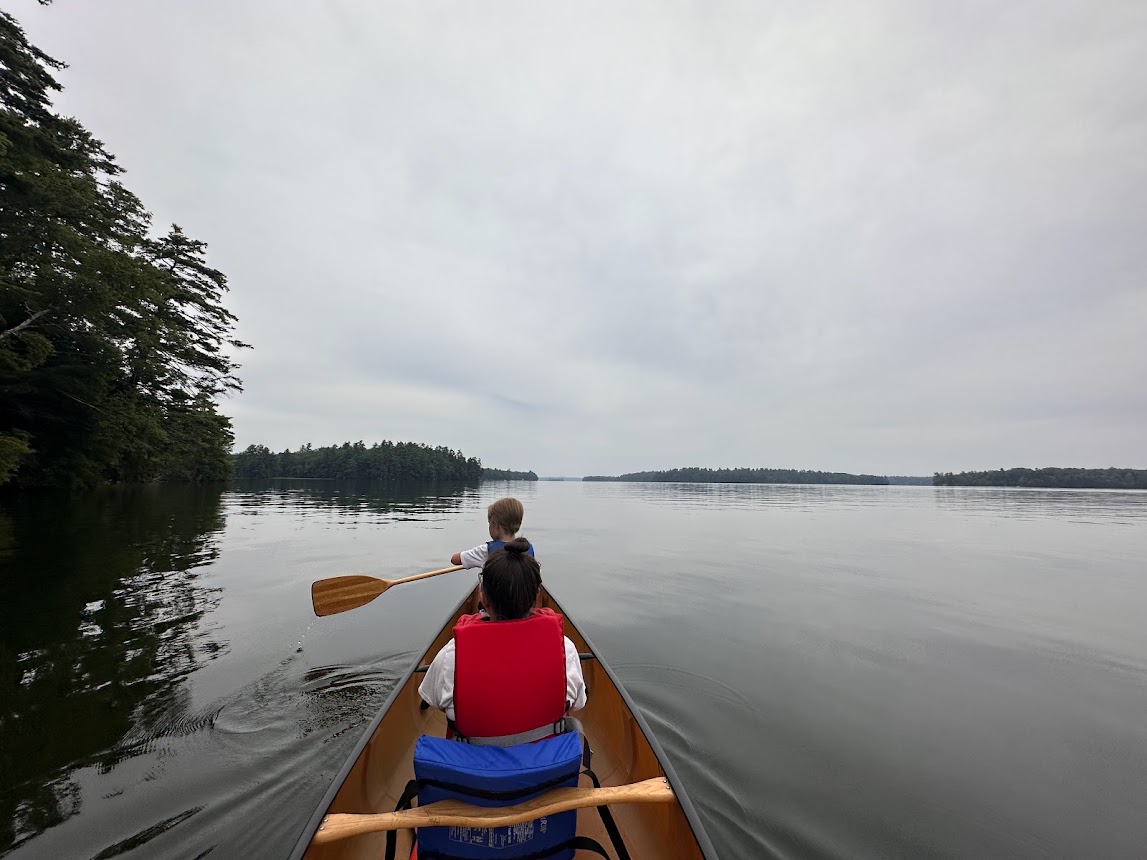
I wrapped up whole-brain radiation on August 2nd. The process of getting zapped by laser beams was pretty much painless and quick. The drives down and back were great because of the company that took me. I had one Doxil (chemo) treatment, which also went relatively smoothly. It’s one of the hardest-hitting chemotherapies that I can be on, but at this point, I am just so used to this, I guess. But all in all, the week went smoothly, and we ended it by heading up to Maine for a long weekend at a lake house with our extended family. 

Maine was beautiful. Spending time with family was fun. Being in nature was glorious. The timing after being in Cancerland for 10ish days straight was priceless. My best longest-time friend Sara also visited last week and helped me with everything around the house that I needed assistance with, including getting the kids off to Camp Kesem. She was not only helpful, but we got to be silly and say YES to some great activities. She fit right in with my Oyster River besties, too — my heart is so happy and full! All around, the last few weeks have been full and mostly wonderful despite all that Cancerland had to bring to the table. 
Now the recuperation and healing from whole-brain radiation is a totally different story. I am 18 days out from the last blast. I started feeling unlike myself a few days post, primarily due to steroid use*, but the actual radiation side effects started to majorly impact almost everything. 

  • My cognition is impaired, meaning I am slower with processing, I have a hard time focusing on any task or conversation, and it takes a lot of effort to do either of those things; my short-term memory is shit, and numbers like simple addition and counting just aren’t computing quickly for me. My brain isn’t mine right now. It’s such a strange feeling to know I was different before, and I know what it is to be clear-headed and capable at a more advanced level, and I am just unable to get there. I was writing a simple word the other day and couldn’t figure out how to spell it. I knew I spelled it wrong, but I couldn’t even recognize which version was the correct version. So phonetics is what I went with. At times it’s like being a 1st grader again. I wonder if this is a mild feeling of what it’s like to recover from a brain injury? Just know, if we are having a conversation and I am getting glassy or asking you to repeat things/clarify details you just said minutes before, blame the zapped brain. I care; I really do! 
  • Physically I have changed. This is a two-parter. Because of the steroids, I have been hungry, so I have been eating; I have gained weight from that and water weight. I am puffy. My skinsuit feels like the shell of someone else. I am uncomfortable in basically anything that isn’t loose or elastic. 
  • The second part of the physical changes is what the actual radiation has done to me. I am much more physically weak. I have had extremity weakness in my arms and hands and numbness in my toes. My legs can still walk and get me where I need to go, but my balance is off, and I can’t walk very fast. My hands shake a little all the time, and it’s hard to do fine motor activities. I am painting a room in my house right now, and the task itself is taking much longer than it would typically have before radiation and my hand shakes, so I have to be more deliberate when doing those edges. But I am DETERMINED to get it done. 
  • To add to this, my hair thinned to the point where I looked like a zombie back from the dead this week, so I shaved it off. Before, I think I did a decent job looking pretty un-sick; now I look like cancer Hannah. Puffy, bald, and dazed. 
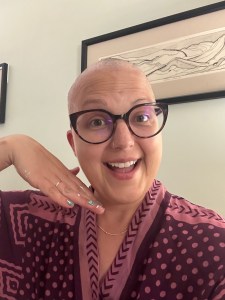
No hair, puffy face, and paint on my nails from my distraction project

What can I expect going forward? The truth is we don’t really know. Everything I am experiencing sounds pretty standard at this point, but how fast I recover and how much of my old self I get back is all uncertain. Cognitively, in a few weeks, I should start to see some slow progress toward losing that fogginess and distraction. I can add cognitive therapy to rehab if needed, which is like PT for the brain. I have been working on my NYT’s online games and other brain teasers to exercise that muscle. If you have any suggestions or want to send any brain exercises my way, I am open to receiving them. Physically, I have asked about OT or PT, but we will give it a couple more weeks of just “being” before adding those therapies. I want to go out for walks, so if you are looking for a SLOW walking partner for a mile or two, text me to get out. Watch out, though, I might bump into you a few times along the way 🙂 

The PA in the radiation oncology office reminded me last week that my brain has been through a lot; that I need to give myself grace for this month and not push myself too much. So I have set out to do this painting project to provide myself with a distraction that isn’t too challenging physically or mentally but definitely is the right level of push right now. 

My back has been increasing in pain this last week. This could be due to side effects from radiation, but my gut tells me the cancer is probably pretty active in my spine still. Because the cancer is in the spinal fluid and not just spots in the brain tissue, when we did the brain radiation, the beams only hit the fluid of the brain, not the spinal cord. I’ll write up another post in a few days about the ins and outs of this, but basically, we couldn’t treat the whole water system, just part of it, but ultimately they all mix together. So please be praying and sending some good vibes that the scan of my spine that I’ll have next Friday shows some positive signs of slow cancer growth and no significant changes in the wrong direction. 

*To refresh you, I am taking steroids to combat the inflammation that is happening in my brain due to active cancer in the spinal fluid and now the radiation itself. The inflammation causes me symptoms like nausea, vomiting, dizziness, and headaches.*
General breast health 101

*I want to be clear that I am not a medical professional. If you have any personal questions where medical advice is required, please seek out a medical professional*

In recent years insurance started covering routine screening mammograms for women over 40 years old. But what do those of us with breasts (women, men, trans, and non-binary folks — that’s all of us!) do before age 40 and between screenings? Also, are mammograms our only option? I hope that this first breast health post helps to answer some questions.

Personal recommendations

My number one recommendation is to get to know your body. You are your biggest advocate; no one should know your body better. Self-breast exams are exactly how I found both of my tumors. If I didn’t know what my own chest felt like, then I wouldn’t have been able to tell my doctors something was different, off, not my normal.

And to be honest, there are plenty of women I know that go to their doctor saying, “This doesn’t feel right,” and their doctor disregards their concerns because they are “too young” or “not at high risk,” or whatever else they have been told. If you know your body, you can push back, you can advocate, you can get an answer. But if you leave the knowledge of your body up to someone else, you are giving up bodily autonomy.

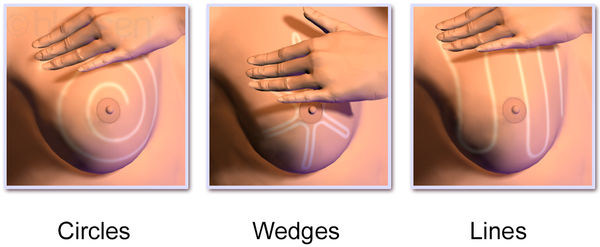
Actually, I want to take a second to give a shout-out to both my mom and my sister, Heather. My mom used to hang this shower tag in our shower that showed me how to do a self-breast exam. I was a teenager and I didn’t take it super seriously, but I can still see the pink, black, and white images and I remember thinking I guess I’ll do this a few times a year and be okay. I appreciated that unspoken encouragement to take my breast health seriously. Heather, on the other hand, was more outspoken when it came to healthy bodies. She was the one that told me I needed to make sure I knew my body before anyone else knew my body. That went for both breast health and sexual health. And while I am here, I want to say that I have known two people (not associated with my cancer community) to find their own cancers in their genital areas because of self exams/knowing their bodies and their normal. Knowing your body is empowering and enlightening.

Since this post aims to inform about breast health, let’s get back to that topic. Breast exams are something we need to do more than a few times a year. Teenager Hannah was wrong to think that a few times a year was enough. In fact, if you have breasts (remember that’s everyone) you should be doing these self-exams once a month, around the same time every month, so that you’re feeling the breast tissue in about the same place in your monthly cycle (if you have one). There is a social media movement called #feelitonthefirst which, is just a nice reminder to do your self-breast exam every month on the first day. Sometimes you might feel a lump/bump one day and not feel it a few days later. Our tissue changes throughout the month, so the rule of thumb given to me by my first oncologist was self-exams once a month and not too close together or we will never notice a change, or we will notice every little change. So my second recommendation is self-exam once a month, and changes are normal.

I want to reiterate too taht EVERYONE should be doing self-exams throughout their whole lives — flat chested, with or without mastectomies, with or without reconstruction, health breasts, men, women, teens, postmenopausal folks. All of you!

Self-breast exams

How do you perform a self-breast exam? What are you feeling for? What is normal? What is not?

I will provide a few pictures to help guide you, but honestly, head over to Instagram and look at the tag #feelitonthefirst or #selfexamgram, and you will see many great videos on how to do these exams. My particular favorites are by @dearcancer_itsme (does them with her kids and she’s flat chested after having implants out), @ihartericka (she is post-mastectomy, has no nipples, and does hers without a shirt on which I find helpful), and @allynrose (she does some laying down, standing, and talks you through stratagies).

To begin, look in the mirror with your shirt off. You’re looking for any physical abnormalities such as dimpling, lumps/bumps, discharge, puckering, or skin changes. Make sure you’re lifting your arms up as well as looking while your arms are down. Sometimes changes don’t appear until the skin or tissue is stretched tighter.

Next, feel those breasts! You can do this in the shower or in front of the mirror. There are a few different methods for feeling the tissue, but I personally like doing the wedge and rubbing rather than tapping. You will see both rubbing and tapping used, it’s just a matter of preference. I will use the tapping method more on my neck, clavicle, and sometimes underarms. Do whatever method is comfortable for you and helps you feel all of the tissue.

Finally,as a reminder, you have two breasts, so do the exam on both sides. You’re feeling all the up into your neck, under your arms, and into those armpits, your sternum, and of course, the breast tissue. If you wear a bra or are familiar with where a bra would wrap around your sides, that’s all potential breast tissue.

The what if

Now what do you do if you find something like a lump, puckering, skin change, etc? Do not panic, like seriously. Remind yourself that most of these things are benign. Do another breast exam in a week or so and see if there have been any changes to that area. If the change in your tissue has grown bigger, is swelling and tender, or doesn’t resolve itself in one to two weeks, make an appointment with a GYN or PCP. It’s never too early or too late to get some professional eyes and hands on something of concern. I personally went to my GYN when I found my first lump because I was still breastfeeding and figured they would know breasts best at this stage of my life. With the growth on my sternum (second diagnosis) I was seen by my oncologist.

My first lump felt like the size of an almond, pretty firm, and was sort of stuck in place on my rib at about 6 o’clock on my left breast. I made sure to let some friends feel it before I had it taken out. As uncomfortable as that was, sharing that experience, it was just the start of me trying to help others advocate for themselves and their bodies.

What if you get it checked out, and your doctor is concerned? Usually, the provider will order a diagnostic mammogram, an ultrasound, or maybe even a biopsy. For my initial diagnosis, since I was breastfeeding, a mammogram wasn’t performed right away. Essentially a breast with milk in the ducts will just look like a while mass of tissue. Impossible to read. So instead I was recommeded to get an ultrasound and when that showed concerning features, I was then recommended to get a needle biopsy. The biopsy results then confirmed that the almond-sized lump was indeed cancer.

Again, I want to reiterate that a lump doesn’t automatically mean cancer. I wasn’t even thinking that the biopsy would show cancer. I was sure I was going to be told I had a fibroadenoma or a cyst because I have always had fibrous breasts and I knew I wasn’t at high risk for cancer.

Things turned out differently for me, but I still beleive that most of you will be okay. Just make sure you take your health seriously. If you are worried or not comfortable, find someone who will listen and get to the bottom of the concern.

Screening or diagnositc options

Mammograms aren’t our best option out there. You have probably heard me say this before. If you are at high risk for breast cancer, you are young and have had a concern or concerning mammogram, or you’re breastfeeding and need screening, then do not settle for a mammogram only. Please ask your provider to give you a breast MRI, and ultrasound, or now something new is a breast CT. I cannot wait for the breast CT to come to our local area. Breast MRIs can be problematic because they are extremely sensitive and can give false positives, which can force someone into getting a biopsy that shows that the lump/bump is actually negative for cancer. This can be stressful and unsettling. Ultrasounds are good if you’re looking at specific place in the breast, but aren’t great for looking at the whole breast. I don’t know much about the breast CT yet, but what I have read is that they are pretty fast and easy like mammograms, but without the squeezing. That sounds promising.

Most premenopausal folks will be told they have dense breasts, which is another hard thing about mammograms. They just don’t pick up on the very small details that are hidden in dense breast tissue. If you are told you have dense breast tissue, I highly recommend that you ask about alternating mammograms and MRIs for screening.

What else do you want to know?

Comment below if there is something you want to know more about. I want to make sure you’re getting trusted and meaningful information!