
Since the last update, I have had 2 infusions bringing me to a grand total of 22 so far. Unlike early-stage breast cancer I don’t count down until I am done with treatment, I count up — the higher the number the longer I have been on the treatment line, which means it’s all working!
On Sunday I had my scans. The scanxiety kicked in on Saturday and stuck around until I got the results today.
Let’s get down to business: the cancer is still very small and stable. YAY! That’s always good and welcome news! Seriously, as soon as I hear “your scans look good” I am at ease. But as the title of this post says, I have received news of my first set back. I didn’t get my 23rd infusion today. I am still processing it all.
At my last set of scans, we saw some inflammation in my right lung. This inflammation is called pneumonitis, or in radiology speak it is called ground-glass opacity. The hope was that with time the pneumonitis would shrink or at the very least not grow in size. The scan results I had today showed growth. What does that mean for treatment? For today it means no infusion. I am on two drugs that are shown to have a lung inflammation as a potential risk. We don’t know which one is causing the inflammation, so Dr. Tolaney wants to stop the most likely culprit (pembro) for a period of time. The pneumonitis can be fast-acting and fatal if not addressed appropriately. In fact, one person in my clinical trial has died from pneumonitis recently. My small trial. Yikes! Dr. Tolaney is acting cautiously by suggesting I take a break from the pembro. I trust her judgment. She works with both of my trial drugs regularly and generally has a good intuition about these types of things.
In the meantime, I will still be on abemaciclib twice daily, and I am still in the trial. And in nine weeks we will rescan and see how that ground-glass opacity looks in the images. If there is a reduction of the pneumonitis, then I can resume pembro, maybe. You see, both drugs can cause inflammation on their own, but together they are causing more frequent rates of inflammation over time. So there is a possibility that the two are just not compatible for the long term. This is what clinical trials are for; so that we can learn about these types of interactions.
As of right now, I am asymptomatic, sort of. This just means I am breathing fine! In fact, I went cross-country skiing two weeks ago and felt great! I have a lingering cough from a cold virus I had at the start of the year. The cough could still be a result of the cold, or it could be a side effect of the inflammation. In the next nine weeks, if the cough doesn’t extinguish itself, it’s likely from the inflammation. If the cough persists or gets worse, or if I find myself in a situation where I am having trouble breathing, I will get scanned before the nine-week mark and we will proceed based on what those images show.
I always leave my oncology office with hope and a plan. Even today I left Dana Farber reminding myself that this isn’t terrible because this isn’t a progression of cancer. All in all, I am doing pretty good. Hopeful that we caught the inflammation early enough that I won’t see any more growth and hopeful that I will remain asymptomatic. But as things go, I am reflecting back to my appointment and I can’t help feel the good with the bad. Although my oncologist doesn’t seem alarmed or even worried because we are moving forward with caution, I still feel a bit defeated.
I am so happy that this set back isn’t cancer growing. But I have high hopes for immunotherapy, which is why I want to be on the drug so badly. I think the abemaciclib is likely the drug that is shrinking my tumor sites so much, but I think that if I have a fighting chance of many years without active cancer ahead of me, it will be because of immunotherapy. There is something just magical about the idea that one’s own body could be jump-started to heal itself.
Tonight I am going to give myself permission to be disappointed. And tomorrow I am going to will myself back into a place of hope and healing.
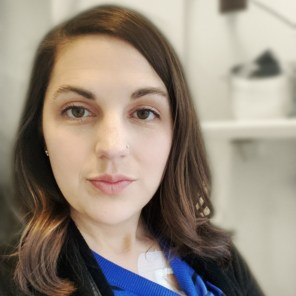
 Hannah in CancerLand